If you want to know...
Which muscles you need to treat when pain occurs during a movement or existing pain is intensified:
Example 1 - Which 4 muscles you need to treat when pain occurs during horizontal shoulder abduction?
Example 2 - Which 3 muscles you need to treat when pain occurs during lateral flexion of the upper body?
Example 3 - Which 4 muscles you need to treat when pain occurs during knee joint extension?
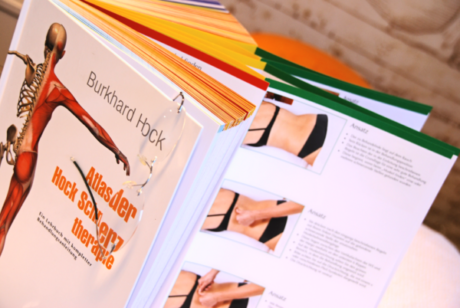
How to work with the Atlas of Hock Pain Therapy:
1. Look up the movement in the Atlas (pages 29 to 81) that corresponds to the patient's movement that triggers or intensifies pain.
2. On this page you will find the muscles that need to be treated, sorted by priority, with page range information.
3. Go to the corresponding page range (altar fold with always four pages).
Here you will find:
- where and how to find the 104 described muscles - how to stretch the 104 muscles - 104 muscle drawings with detailed information
However, you should read "Dealing with the Poison Dwarfs" and "The Pain Scale" in Chapter 1 before treatment.
Recommended Book
Atlas of Hock Pain Therapy
View now →